• (615) 972-0250
  • This email address is being protected from spambots. You need JavaScript enabled to view it.
Folded Rugs

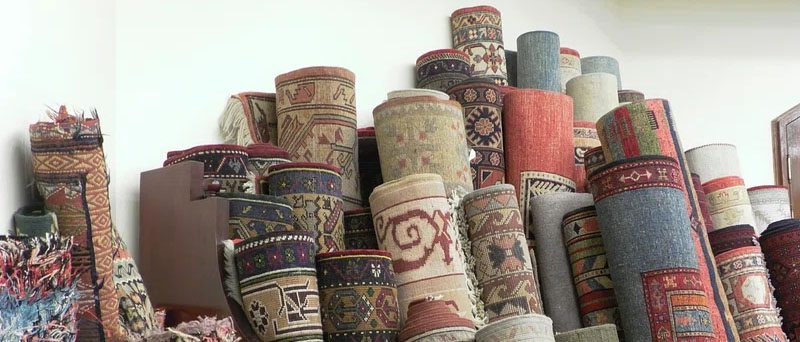
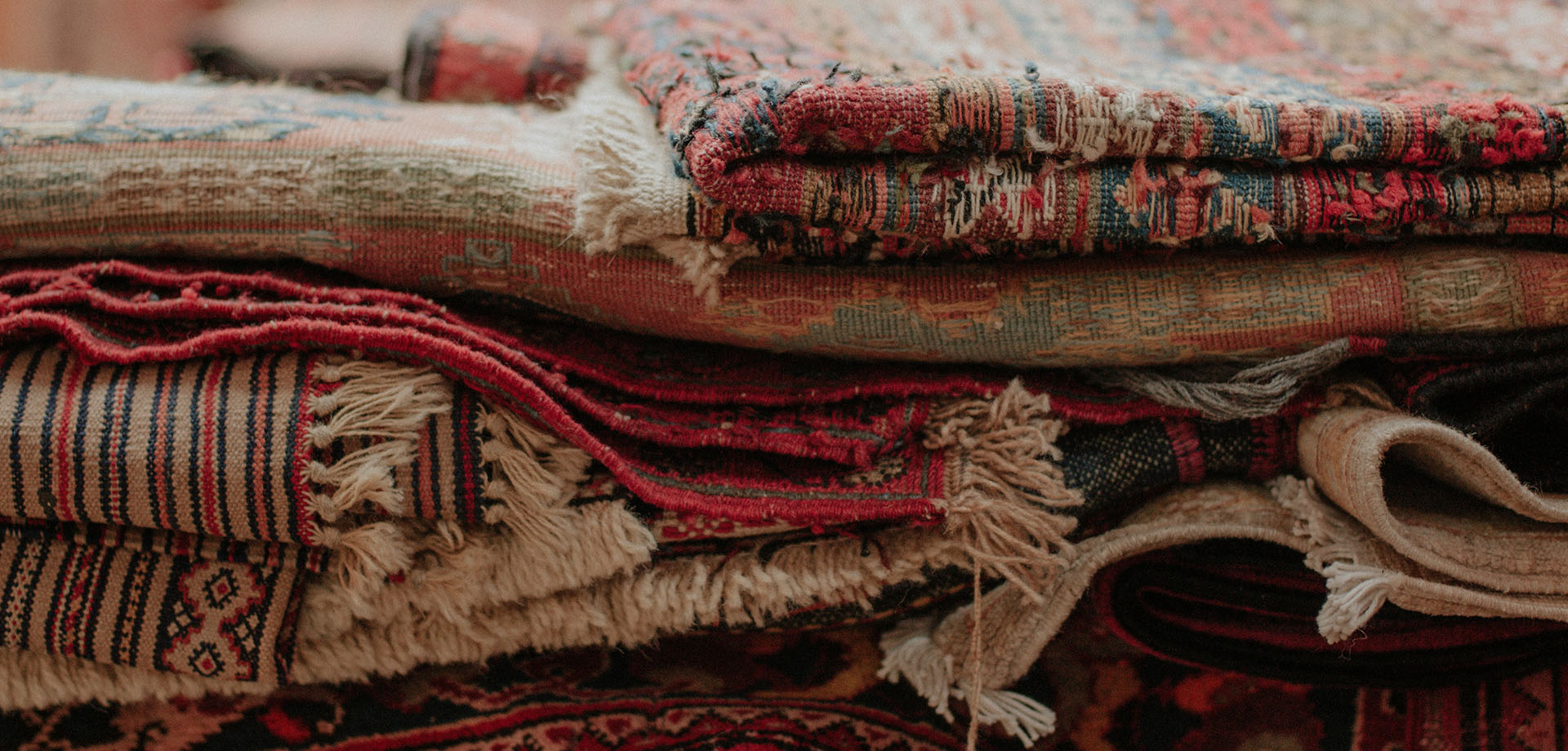
Often new rugs from the dealer or rugs that have been rolled or folded for storage may not return to their original intended shape when first laid (even over a pad). Many larger rugs have been barrel rolled - a method of folding and rolling to make them more compact for easier handling and delivery.

These folds are caused by the foundation yarns being stretched while folded or rolled. Although most will be released over time, there are ways to accelerate this process. And wrinkles in an area rug are not only an eyesore but can be a tripping hazard as well.

Here are 5 Suggestions to get the Creases and Fold Marks out of a rug! Use any single one, or a combination of several!

  1. Back-roll or reverse-roll the carpet. This is the easiest way to deal with a rug that does not lay flat. Fold the rug in the opposite direction it curls or creases. Be careful! If you hear cracking noises stop immediately. That means the backing is dry-rotted!
  2. Place heavy furniture or weight on the rug. This should accelerate the settling time at least two-fold.
  3. Wait for the rug to settle on its own: allow the rug to sit open for several weeks and it should naturally release tension from a hard roll or fold especially in higher humidity environments.
  4. Place the rug upside-down outdoors under the sun on a clean, dry surface in temperatures between 70-85 degrees Fahrenheit. Direct sunlight for several hours should help the rug release tension naturally and at the very least make it more supple for reverse-rolling as noted in the suggestion.
  5. As a last resort...Hire a professional rug cleaning company to “steam” the rug with a steamer or truck mount and dry it on an air table. Be sure they check for color fastness first!

Cat on carpet

Why is the indoor environment important to our health? Most people are aware that outdoor air pollution can damage their health but may not know that indoor air pollution can also have significant effects. EPA studies of human exposure to air pollutants indicate that indoor air levels of many pollutants may be 2-5 times, and occasionally, more than 100 times higher than outdoor levels. These levels of indoor air pollutants are of particular concern because it is estimated that most people spend as much as 90% of their time indoors.

The following are ten suggestions professional cleaners can make for immediate improvement of their clients’ indoor environmental quality (IEQ):

  • Keep Walkway and Entries Clean -  Start by keeping outside sidewalks, entry areas, porches, and steps clean.  Sweep, dust, vacuum, or use a leaf blower to remove soil and debris from entries to eliminate tracking into the facility. 
  • Use Mats to Trap Soil at Entries - Outside and interior mats to trap and contain particles and moisture should be placed at each entry.  This not only extends the life of the carpet, it greatly reduces the quantity of particles that enter and builds up within traffic areas, eventually becoming airborne.
  • Clean Shoes at Entries - Studies conducted by professional engineers on carpet dust samples indicate that fine particles containing lead are reduced by cleaning or removing and leaving shoes at the entry.
  • Purchase and Use High-Quality Vacuum Equipment - A quality, durable upright vacuum with brush agitation is a must.  Price is not as important as quality here.  Check trade or consumer magazines and expect salespersons to provide technically accurate information.  Avoid door-to-door sales tactics. Also check the Carpet and Rug Institute’s list of vacuums that have passed the Green Label Program at: www.cri-rug.com.
  • Use High-Efficiency Vacuum Filter Bag - The use of high-efficiency (HEPA-type) double-lined vacuum filter bags that filter out 99% of particles down to one micron or less in size is highly recommended.  Avoid cheap paper filter bags that remove particles down to seven microns only.  Small particles that pass easily through paper filter bags are a major source of respiratory irritation, as well as household dust.
  • Vacuum Frequency - Advise customers or janitorial staff to increase the frequency of vacuuming before soils sift downward and become embedded in the carpet pile. Vacuuming should be done more slowly in entry areas where most particle soils accumulate.  Traffic areas should be slowly passed over two or three times.  Periodic use of vacuum unit attachments or a canister vacuum to remove accumulated soil from entries and along baseboards is also recommended.
  • HVAC Filters - Use quality reusable electrostatic filters for HVAC systems.  These filters have acrylic rods that vibrate and create static electricity that charges soil particles, thereby attracting them to the filter.  Anticipate a cost of $50-100 for quality filters.  These filters should be removed and flushed free of collected soils every month.
  • Clean the Carpet - Professional cleaning compounds lift and suspend fine particles of soil.  Then, careful extraction using hot water flushes them from carpet fibers. Specify a cleaning technician who is trained and certified by the Institute of Inspection, Cleaning and Restoration Certification (IICRC) (800 835-4624).

Clean Other Soft Surfaces - Clean upholstery, drapery, bedding, and other fabric surfaces; wash linens weekly. The objective of professional cleaning is to remove the maximum amount of soil (anything foreign to the construction of the fiber) with the least damage to the fiber. Most soil is slightly acidic. Soil falls into three classifications which may require special chemicals or procedures to remove:

            1. insoluble (particle) - sand, quartz, feldspar, limestone, gypsum, clay, and carbon

                                    -hair and dander

                                    -vegetable matter (cellulose)

            2. water-soluble - sugar, starch, salt, etc.

            3. dry solvent-soluble - oils, grease, etc.

  • Control moisture and humidity - Dust mites and mold are the two most common allergens present in higher-humidity climates. According to studies conducted at Wright State University, dust mite infestation will be eliminated if the relative humidity of the building, not just a particular area, is consistently maintained below 50 percent

Molds, which are classified as fungi, require humidity of 70 percent or higher and a food source of organic-based material to grow. Cooler surfaces, which may have a relative humidity near 100%, create a perfect breeding area for mold. By reducing and maintaining the relative humidity of a structure below 50 percent, both dust mite infestation and mold growth will be prevented.

            Ten steps to a cleaner, safer environment - a small investment for such a big return in indoor environmental quality.


Choosing the Right Rug

Many of you are replacing your carpet with hard surface flooring and area rugs. Area rugs offer the most variety in floor coverings. But before you buy, you need to know just a couple more things about them - other than that they can define a space and elevate your décor. Whether you choose handmade or machine-made, antique or thoroughly modern, you need to consider these questions:

Size And Shape? Area rugs are made in standard and non-standard sizes and they can be rectangular (most common), round, square, oval, octagonal or long and narrow for runners. The most common sizes are 2’x3’, 4’x6’, 5’x8’, 6’x9’, 8’x10’, 9’x12’ and up. Choosing the correct size area rug depends on the dimensions of the space you want to cover. Here are some hints on how to figure out what size rug you need.

Thinking square or rectangle? Place a piece of copy paper where each of the corners will fall in the area you wish to cover. Measure the space and adjust the “corners” as needed to make the space larger or smaller given the standard rug sizes. If you’re considering a round rug, you can run a piece of tape from the center of the space you want to cover to the outside edge. Measure it. This gives you the radius of the circle. Double it and you have the diameter.

If you choose to cover the whole room with your area rug, it is best to leave a 12-inch to 15-inch border of flooring exposed to frame your rug. Rugs in the dining room table should be large enough so that when seated at the table, the back legs of your guests’ chairs are on the rug with enough space to push back and stand up. One more thing. When you go to buy, be sure to take along a tape measure. Like textile clothing sizes, they need to be “tried-on”, or at least measured so you know what true size you are buying, particularly if it is a handmade rug. Many hand-knotted rugs are not perfectly square!

Color is at least as important for an area rug as how it’s made. The combination of color, design, and setting (your room) all come together to create your artistic statement. Area rugs don’t have to match the colors of the room precisely. Great interior design often features combinations of colors that either contrast or complement a room’s primary color scheme. But a good rule of thumb is to stick to one primary shade and two additional colors.

Fiber is another consideration. Most hand-made rugs are made of natural fibers, with wool being the most common face fiber and cotton the most common foundation fiber. Natural fibers require a little extra care and cleaning to keep the rug looking great for years to come. If you’re in the market for a silk rug be ready to make a considerable investment. Also be aware that there are some “faux” (false, fake) silk rugs in the marketplace. Don’t get fooled into buying one just because the price is “too good to be true.” It probably is!

Pattern is divided into three categories in the rug industry:

  • Curvilinear means curved lines. It refers to patterns with swirls, arcs, and bows.
  • Geometric refers to patterns based on simple geometric shapes such as lines, triangles, squares, and rectangles.
  • Pictorial, the smallest group, refers to patterns that portray people, animals, and scenes.

Style is such an ambiguous idea. It simply means a distinctive manner of expression. Over time, names get attached to the word style: Traditional. Contemporary. Classical. Art Deco. Transitional. Your distinctive style can draw on bits and pieces of all of these and more. It is a personal expression of the way you want to live your life and decorate your home or office.

Rug styles are also based on their origin: Navajo, Persian, Chinese, Turkoman, Turkey, Caucasian, Tibetan, and Indian just to name a few. No one expects you to know all or even some of these. You need to know what you like. If you do some research online and find an image of an area rug you find attractive, take it to a reputable retailer. It’s another way of beginning the search.

What Now? Know and trust your rug retailer. If you are shopping for antique rugs, this is fundamentally important. All investments should be made with the help of a knowledgeable counselor. If this, not an investment, then what you have learned here will guide you to buying the best area rug in the right style for the right price.

Finally, Be Calculating! Figure the total cost of rug ownership including rug pad and ongoing maintenance. The price on the tag you’re buying is just one component of your cost. Proper rug cleaning and maintenance is a smart investment.

Hand loom weaver

Handmade Rug Cleaning and Maintenance

Walk All Over That Rug - It’s important to understand that even though a handmade rug is valuable, it’s made to be used.  Don’t keep it covered in plastic like Aunt Edna’s sitting room sofa. With usage, most hand-made rugs gain a certain patina that enhances their beauty and value. If you’re not going to enjoy it, why have it?

Vacuuming Is Good - You should vacuum or sweep your area rug as you would wall-to-wall carpeting. Watch the fringes. You don’t want to have to pull them out of the vacuum cleaner. Handmade area rugs can benefit from being turned over and vacuumed. Lift the rug carefully and you will see all the dirt that has filtered down. Yuck!

Turn, Turn, Turn - Rotating your rug occasionally (annually) will help even wear patterns and prevent uneven fading. When rugs are exposed to the sun evenly, the colors harmonize and the rug ages nicely. If parts of the rug receive too much or too little sun, one side might fade faster.

See Spot? Go! - Spot clean your area rug immediately after a spill. A water spill should be blotted and then dried with a hairdryer set on a warm temperature. Try to dry both sides of the rug if possible.  Anything else should first be blotted with paper or terry towels to absorb as much as possible, and then apply salt or baking soda to the spot for a few minutes to absorb the rest.  Once it dries, vacuum off the salt or baking soda. We also have a WoolSafe® approved spotter available free to our clients.

Professional Cleaning - It is recommended that your rugs be professionally cleaned on a regular basis.  Take your rug to a trained, professional carpet and rug care company to clean general soil, pet-related issues, and old or persistent stains. Please do not try to clean it yourself.  You might make it worse!

To find a professional in your area go to www.woolsafe.org/usa or www.certifiedcleaners.org .


Cleaning for Health

Clean for Health. . . Not Just For Appearance

Let’s face it . . . life is messy. And it’s surprising how fast a tidy home can get dirty, especially with kids, pets, a busy social life, and trees dropping “who knows what” all over. Generally speaking, a “dirty” environment where dust, soil, microbes, mold, pollen, and potential pathogens thrive does not promote good health. Things you can do to create a healthier indoor environment are having a regular cleaning routine and hiring a certified professional company like Chase Carpet and Rug Care for periodic deep cleaning of your furnishings and flooring.

Dusting furniture, blinds, window sills, and other hard surfaces, as well as sweeping, damp mopping, and, especially vacuuming with a high-filtration machine on a regular basis can remove a high percentage of dust and soil.

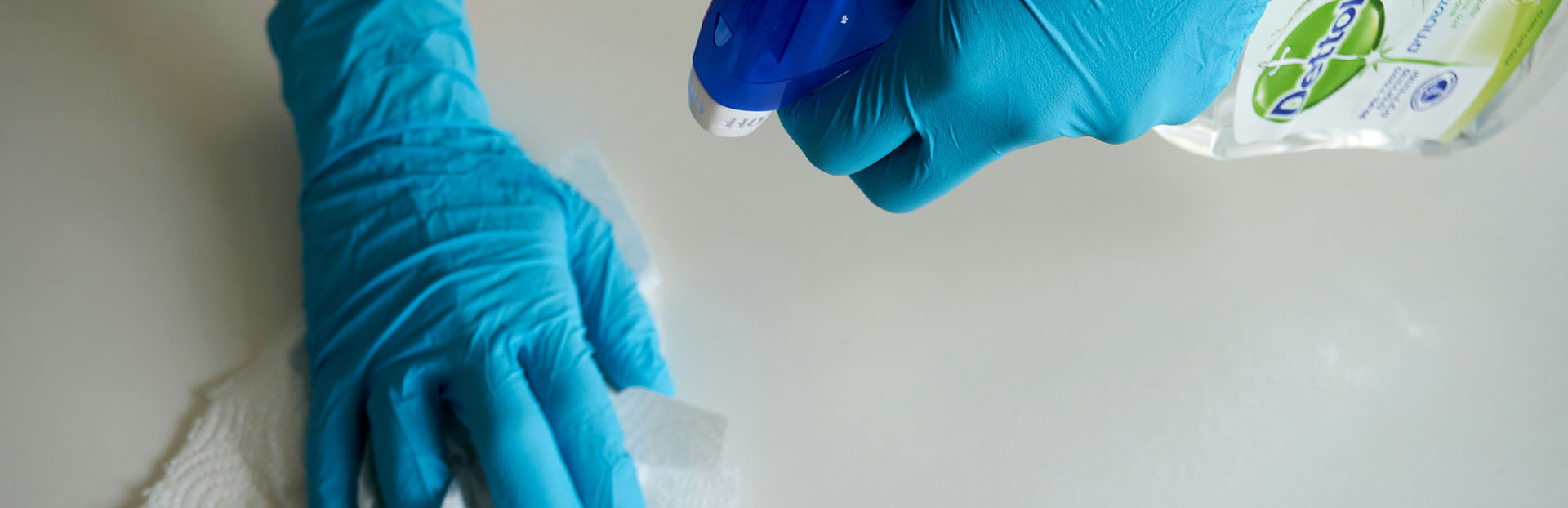
Cleaning products that remove or kill harmful germs and sanitize areas like bathrooms, countertops, tables, and hard surfaces where food is prepared or eaten can minimize the health dangers caused by contaminated surfaces and germs.

Although there is much homeowners can do to clean up and improve living conditions, periodic deep restorative cleaning is an important and highly beneficial supplement to the homeowner's cleaning routine.

Here are some areas where professional services will be particularly beneficial:

  • Carpet and Rug Cleaning - vacuuming removes a large percentage of dust and dry soil, but to remove deeply embedded and sticky dirt safely without damaging the carpet or rug, having carpet or rugs cleaned professionally is highly recommended.
  • Upholstery Cleaning - over time your favorite chair, sofa, or recliner builds up oils, sweat, dead skin cells, lost cookie crumbs, etc. on the headrests, armrests, cushions, and pillows. These are not always easy to clean, and the color and fabric could be damaged if the wrong cleaning products or techniques are used. You can trust us to know what cleaning chemicals and techniques will be safest and most effective.
  • Hard Surface Cleaning - ceramic tile or natural stone - these flooring materials are relatively easy to maintain and clean. However, soils build up progressively and in cracks or grout lines. Sooner or later a professional cleaning service may be needed to deep clean, restore, and seal these surfaces, especially troublesome grout. That’s the time to call a certified, professional

Christmas tree decoration

‘Tis the Season for Holiday Spots and Spills

The indication of a great meal may be an empty plate, but unfortunately, the true sign  of a joyful holiday gathering is often gravy dotting one’s dining room rug or carpet, or cranberry juice dribbled on a chair (sigh).  But just enjoy your festivities worry-free, because we’ve got the solution to getting your fine furnishings clean again  Remember, the longer spots or spills sit on a fabric, the more difficult they may be to remove, so act quickly. Here are a few tips for removing some common holiday spots or spills. Always start by blotting with a clean, white terry or paper towel or scooping up or scraping off excess with a spoon or dull knife.  Never scrub or rub! 

And before attempting any spot removal process always pretest in an inconspicuous area to ensure that the cleaning solution you use will not cause color migration or color loss. 

 Turkey, gravy, butter, and salad dressing: (oil-based stains): Blot up the excess. Apply dry cleaning fluid (Carbona, Energine) to a dry white cotton cloth, then gently work in the cleaning agent from the edges of the spot to the center.  If the fabric is colorfast, apply spotting solution available from your local WoolSafe Service Provider (or mix 1/4 teaspoon of a mild laundry detergent such as Ivory or Dreft) per one cup of lukewarm water to a white cotton cloth, then gently work in from the edges of the spot to the center. Continue until there is no longer transfer of the spot to the cleaning cloth.  Blot with a water-dampened towel. Place a thick stack of towels on the area, weighted down with a heavy object (jug of water or glass dish) and leave for several hours, or use a hair dryer.

 Cranberry sauce, apple cider, and pumpkin pie:(fruit-based stains): Blot up the excess. If the fabric is colorfast, apply spotting solution available from your local WoolSafe Service Provider (or mix 1/4 teaspoon of a mild laundry detergent such as Ivory or Dreft) per one cup of lukewarm water to a white cotton cloth, then gently work in from the edges of the spot to the center. Continue until there is no longer transfer of the spot to the cleaning cloth.  Blot with a water-dampened towel.Place a thick stack of towels on the area, weighted down with a heavy object (jug of water or glass baking dish) and leave for several hours, or dry with hair dryer.  If color remains, mist area with 3% hydrogen peroxide and allow to dry.  Repeat as necessary.

 Coffee, tea, wine, and soft drinks (beverage stains): Blot up the excess. Same as above.

 Jello, colorful cakes, and desserts: (food-coloring stains): Blot up the excess. Same as above.

 Wax: (solid) Use a dull knife to scrape off surface wax without pulling out fibers. Then lay several folded layers of paper towel over the area.  Use a clothes iron on the lowest setting or a hair dryer on the area to liquefy the wax. When it melts, blot with a towel as the wax will absorb into the paper toweling.  Continue until wax is completely removed. If color remains, treat it like a food coloring stain. Note: When working on synthetic fibers be careful not to melt the fibers!

Soot or ashes: (dry particles) First vacuum thoroughly with a crevice tool getting down into the backing! Then vacuum some more. Don’t rub or scrub; you may make the stain worse.  Then follow the steps for oil based stains above.

To find a WoolSafe Service Provider company in your area or for more spotting tips and videos search the WoolSafe site - www.woolsafe.org.  You may also download the WoolSafe Consumer Spotting App to your phone or device.


Cat and dog

Kitty and Pooch Problems? You're Not Alone

Between 30% and 40 % of U.S. households have at least one cat or a dog in residence.  Although they may be our best friends, they may not be the best for the carpet, rugs, draperies, and upholstery.  Animal-related issues and stains can be challenging to remove, so it’s best to attack them while they are fresh.

There are two types of reactions that can take place between the chemicals in an animal’s urine and those in the dyes and fibers of textile furnishings. The first type of reaction is immediately noticeable. The yellow color of the urine can change the color (s) of the fiber or fabric (especially light colors) as soon as it comes in contact with them.

The other reactions develop slowly over several days to several months and can result in permanent changes to the dyes and fiber. Not only can the dyes change but some fibers may become weakened or destroyed by the aged urine. The decomposing urine can also produce an objectionable odor. After cleaning, these areas are more obvious because the soils that hid the changed color and damaged fibers have been removed.  Also, dyes weakened by urine may bleed especially on your fine wool rugs so if you see color transfer as you’re blotting up the urine, take the rug to a WoolSafe Service Provider in your area as soon as possible. 

The next time you encounter a fresh urine “accident,” follow these simple steps:

  1. immediately absorb as much liquid as possible with several layers of white terry or paper toweling.
  2. treat the area with a neutral detergent solution (one teaspoon of neutral white or colorless laundry detergent in a cup of lukewarm water).  Make sure the detergent is free of bleaching agents (no chlorine or peroxide).  Blot (don’t rub or scrub) that liquid with several layers of white terry or paper towel.  Note: always test the solutions first by applying a small amount in an inconspicuous area to determine its effect on the fiber and dye. Wait thirty minutes to an hour to see if any color changes or other problems may arise.
  3. apply the mild ammonia solution (1/2 teaspoon clear or sudsy, uncolored household ammonia in one cup of water ).  Blot again.
  4. apply the vinegar solution (one part white vinegar to two parts water). Blot.
  5. finally place several clean, dry, white terry or paper towels over the area and weigh down with a plastic bucket or jug filled with water.
  6.  allow the area to dry for a minimum of six hours.  Repeat if necessary.
  7. If you discover an old or dried urine spot, skip step #3.  And remember, if the situation is more than you can handle or you have any questions, call a professional.

Normal pet feces tend to be easier to deal with than urine. Compact deposits can be quickly removed with a plastic bag. The surface should then be cleaned with the neutral detergent solution and blotted. Rinse the area with water and blot again. Follow this treatment with a mild disinfectant like dilute liquid Lysol®.  A word of caution: some disinfectants may cause color loss. Test the area first!

Loose feces or vomit require the same clean-up procedure as described for fresh urine removal. This should also be followed with an application of disinfectant.  If your pet’s food contains red dye to make it “look meatier,” this could leave a red stain at the site of the “accident” because it contains an acid dye that colors both nylon and wool fibers. We may be able to remove this with a specialty spotting chemical.  The good news!  If immediate action is taken to remove the animal deposits, little or no change in color should occur, and that “accident” will not become apparent after your carpet or other textile has been professionally cleaned.

Remember, pet issues, if forgotten or never discovered, will return to haunt you.  Dried urine will smell like strong ammonia when humidity is high or when the spot is rewetted.  Feces and urine can contain harmful bacteria.  A spot that is small on the surface is often many times larger on the underside. The urine can damage both dyes and textile fibers.  Unfortunately, the change usually isn’t noticed until the textile furnishing is cleaned.  The damage caused by aged urine generally required professional restoration, possibly color tinting, color removal, and sometimes removal of the contaminated carpet and cushion, and subfloor resealing.

WoolSafe-Approved Service Provider Companies have cleaning methods available to disinfect the contaminated area, reduce the odor, and minimize the discoloration. Unfortunately, it is often impossible to completely restore the original appearance of a textile that has been damaged with untreated or aged pet urine.  Go to www.woolsafe.org/usa to locate a Service Provider in your area. 


Area Rugs

Padding - A quality pad used under your rug helps protect it from damage, wear and slippage. Every rug needs one. For a flat weave, use rubber waffle pad and for a thick hand knotted or tufted, use rubber backed synthetic felt.  Always replace the pad if the rug has had pet contamination. 

Vacuuming - Like most carpeting, rugs should be vacuumed at least weekly to remove dry soil, lint, and hair. If in an entryway, vacuum more often. Be cautious not to vacuum the fringe with your brush bar! Use the end of a vacuum hose from a canister vacuum. Every few months turn the rug face down on a clean, dry smooth surface and vacuum to vibrate out the embedded dry soil.

Rotation - To ensure even wear, your rug should be rotated. Depending on the traffic, the rotation may vary from every six months to once a year.

Spot and Spill Procedures

  • Make sure that you safely and immediately clean up spots and spills before they set.
  • Scoop up or scrape the solids off of the carpet or rug
  • Soak or blot up the excess liquid by blotting with a clean absorbent material. Do not brush or scrub the stain.
  • Always work from the edge of the spot inwards
  • Then spot clean with a WoolSafe-approved spotter www.woolsafeusa.org/consumerproducts  or mild liquid laundry detergent solution mixed 1/2 teaspoon with 1-quart water. Apply small quantities at a time, applied to a cloth, NOT directly to the spot; work into the spot with a small brush or sponge
  • Do not over wet.  Blot dry until most of the moisture has been absorbed and color is no longer visible on the towel.
  • Rinse area thoroughly with a mixture of 6-parts water to one part white distilled vinegar. Avoid wetting the rug's backing.
  • Dry completely. A fan or cool hair dryer can be used to speed up the drying process.
  • Some stains or animal contamination you may find impossible to remove completely in which case the assistance of a professional may be required.  
  • For stains that do not come out using these methods, consult a WoolSafe Approved Service Provider at www.woolsafeusa.org/find/a-registered-carpet-cleaner .

Rolls of Oriental Rugs

Rug Cleaning

Rug experts agree that in-plant rug cleaning is highly recommended for proper maintenance of Orientals and other loose-laid rugs. They should not be cleaned on location like synthetic, wall-to-wall carpet for many reasons:

  • Rug fibers are very different from those found in residential and commercial broadloom carpets. There is far more natural fiber such as wool, cotton, silk, and jute used in rugs than in broadloom carpets.
  • Backings are very different, as natural foundation yarns are more prominent in rugs as opposed to separate synthetic backing fabrics for tufted carpets.
  • Construction is different: woven constructions are most prevalent in area rugs, as opposed to tufting being the dominant construction in the broadloom market.
  • Cleaning technology is different due to the potential for dye migration and fiber distortion.

Failure to perform specialized procedures in a plant may result in permanent damage to the rugs and flooring materials under and around the rug. Incomplete soil removal may occur due to an inability to dust or adequately vacuum both sides of the rug. It is recommended that any rug as well as carpet exposed to heavy traffic, be cleaned at least annually.


Woman Vacuuming Rug with a Cat on the Rug

Importance of Vacuuming

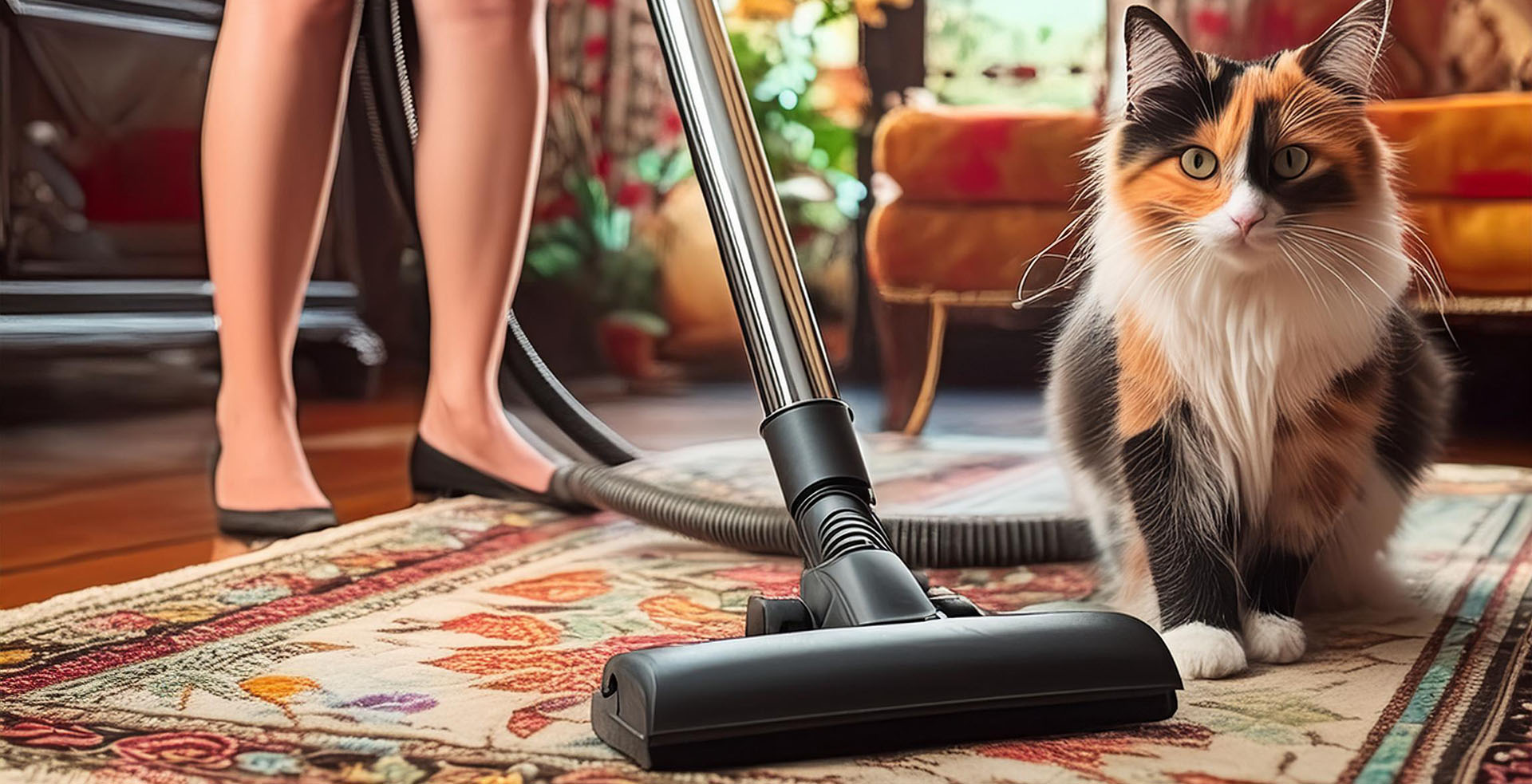
Vacuuming is a “chore” for most consumers. We know that there are probably a thousand other things you would rather be doing. Because of this, most don’t vacuum nearly as often or as well as they should.  That’s why the first step in our carpet or rug cleaning process is vacuuming with heavy-duty commercial equipment and dusting of rugs.

Vacuuming is more than just getting the carpet or rugs cleaned for appearance's sake. Vacuuming is an essential part of maintaining your carpet and rugs as well as keeping your home clean and healthy. Despite the fact that the air in your house may smell fresh and feel clean there are a plethora of teeny-tiny microscopic particles always floating around. These tend to contribute to a considerable number of breathing-related health issues and maladies. People who suffer from allergies and asthma tend to be particularly prone to these nuisances.

The good news is your carpet and rugs are good multi-taskers.  Not only do they bring an aesthetic charm to your home’s decor they also work as a filter that captures and traps these types of airborne particles. Unfortunately, your soft floor coverings don’t have any means of eliminating these particles after they’ve been captured. They must be physically removed.  Experts recommend that you vacuum your carpet and rugs at least twice a week and more often in high-traffic areas or if you have pets. Regular vacuuming not only removes the dry dirt, dander, hair, and soil that is visible, but it also helps eliminate all the microscopic allergens that you can’t see.  The first step of professional cleaning, that is vacuuming, is skipped by most carpet and fabric cleaning companies to save time, which lessens the effectiveness of the cleaning process.

Here are some useful guidelines to help you vacuum more effectively.

  • If possible, use a HEPA-type filter or bag.  These help contain the real fine particles. Empty your bag or canister when it’s 2/3 full.
  • Take your time. 80% of vacuuming effectiveness comes when pulling back, not pushing forward. Check your brush bars and belts regularly. Remove hairs and check bristles on brush bars.
  • Make sure the belt is not frayed or damaged.
  • Vacuum in multiple directions. This will keep your carpet and rugs from getting worn and will also help loosen dirt and soil.
  • Frequent vacuuming cannot be stressed enough. Your carpet has been doing its job by collecting and capturing all the airborne particulates and dirt that find their way into your house.  Your (or a professional's) job is to remove them from your carpet and rugs and dispose of them correctly.  Your carpet and your family with appreciate it.

If you’re looking for a new vacuum, check the Carpet and Rug Institute’s list of Seal of Approval/Green Label certified vacuums at www.carpet-rug.org. They are tested for three criteria:  Soil removal, dust containment, and surface appearance change. 


Oriental rugs, Carpet Care

Your carpet is a significant investment, both in monetary terms and overall home image. It is important to implement a good maintenance program from the beginning. A consistent and effective carpet care program can help preserve your home’s or office’s positive image and dramatically extend the life of the carpet.

There are many important reasons we clean and maintain any object, including carpets. The incentive for an effective cleaning and maintenance program is magnified when we recognize these activities contribute to the following:

  • Maintaining the value of your property and reducing the rate of depreciation.
  • Contributing directly to personal security and comfort.
  • Accenting aesthetics.
  • Encouraging topophilia (affection for place).
  • Elevating a sense of well-being, which is the essence of good health.
  • Sending caring messages and images.
  • Promoting human dignity.
  • Managing waste and hazards and contributing to environmental protection.
  • Helping to ensure sanitation – reducing adverse exposure levels.

The appearance of a carpet depends upon several factors – color, pattern, density, fiber, and a viable carpet maintenance program. To keep the carpet performing its best, designing and implementing a comprehensive maintenance plan is very important.

Check the “traffic lanes” often for slight dulling of color; this indicates a build-up of soil and/or abrasion of fibers. Entrance mats or rugs and scheduled cleaning can reduce this deterioration. Areas, where large amounts of gritty soil enter the home, may become dull due to abrasion or scratching of the fiber surface, affecting the reflection of light. Frequent vacuuming with a CRI-tested vacuum helps to minimize this problem (www.carpet-rug.org).

A thoughtfully designed and implemented maintenance program performed by qualified personnel (CRI-SOA and WoolSafe® Service Providers or Clean Trust (IICRC)-Certified cleaning professionals), properly equipped and trained, is essential for optimal long-term performance of your carpet.

There is sometimes a big difference between cleaning the carpet and maintaining the carpet. Cleaning, very often, is the removal of apparent soil. For many carpet owners, cleaning takes place irregularly, on an “as needed” basis. Soiling, however, is a cumulative process that, if allowed to go too far, cannot easily be reversed. Maintenance, in contrast to cleaning, is a scheduled ongoing process of soil removal designed to maintain the carpet’s appearance at a consistent level of cleanliness and minimize fiber damage.


RLS logo19 3

R. L. Seminars, LLC
WoolSafe North America
437 Alfred Ladd Road East
Franklin, TN 37064

Email Ruth


IICRC - A non-profit organization for the Inspection, Cleaning, and Restoration Industries.Master Rug CleanerAssociation of Rug Care Specialists